TESSA
They do not experience an administrative event.They experience another loss.
- Another home ending.
- Another group of adults making decisions.
- Another move into the unknown.
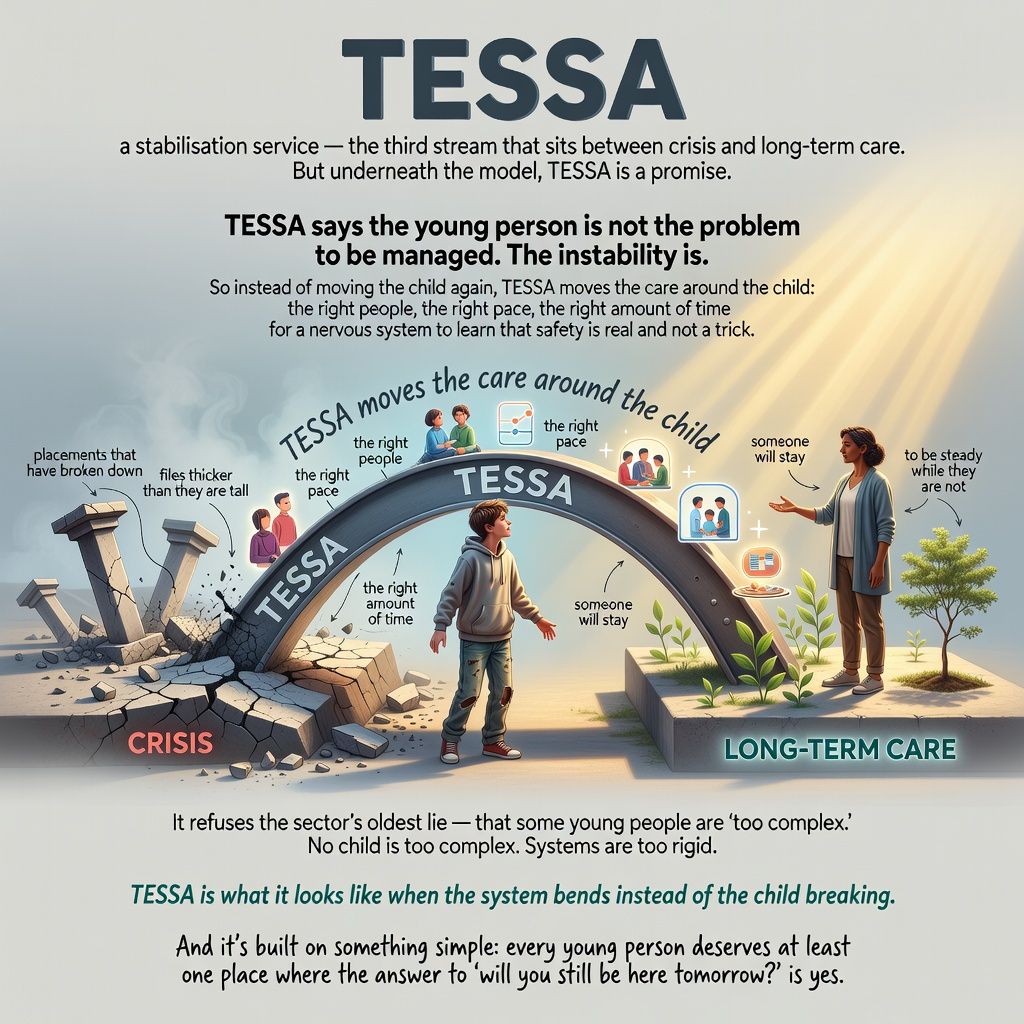
When a child's living arrangement ends suddenly, they do not experience an administrative event. They experience another loss.
At that moment, a child needs more than somewhere to sleep. They need adults who understand what has happened, protect important relationships, prepare the people who will care for them next and remain beside them through the transition.
That is the heart of TESSA.
TESSA is not a finished answer. It is part of a broader reform contribution that we want to develop openly, courageously and with community guidance.
TESSA
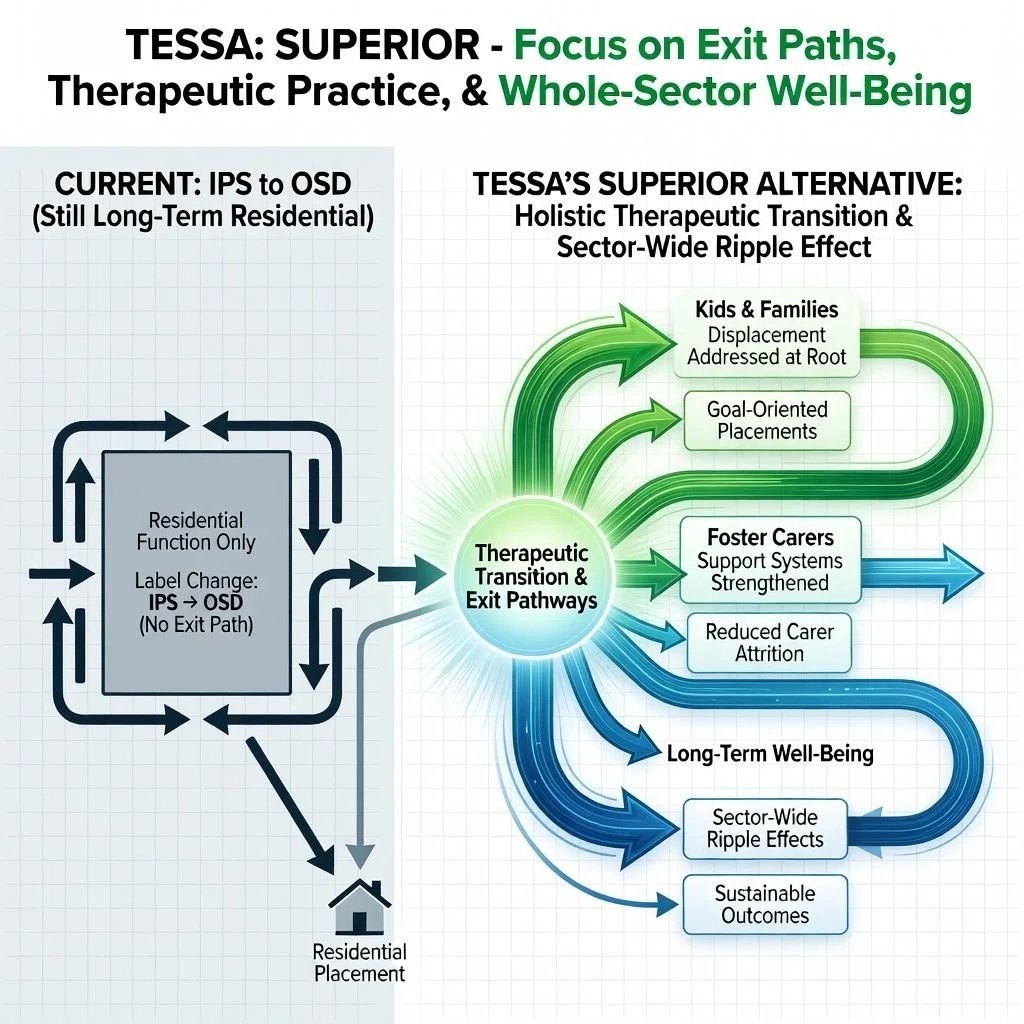
Therapeutic Emergency Support, Stabilisation and Assessment is a proposed bounded response when a child's living arrangement ends suddenly.
The Therapeutic Capability Framework
Asks how therapeutic understanding, relationships and coordinated support can follow a child throughout their journey, rather than disappearing whenever they move between homes, services or systems.
By this becoming a rolling white paper, it has grown beyond a paper. The work now brings together therapeutic and practice frameworks, Commission of Inquiry alignment, legislative and policy requirements, operational pathways, workforce standards, evaluation measures and proposed delivery methods.
It begins within Queensland's reform environment but it provides a foundation that can be considered and adapted across Australian states and territories. Any application must reflect local legislation, statutory authority, cultural governance, community priorities, workforce and service systems.
We want this process to become increasingly community-driven, inclusive and publicly accountable. Future versions can be shaped by evidence and feedback from frontline workers, carers, families, clinicians, service providers, community organisations and people with lived experience.
"The true measure of reform is not whether a model progresses. It is whether children experience fewer losses and someone remains steady when their world is not."